04 January 2014

Crisis of men

A severe crisis of men has been happening in the last 3 decades and perhaps even longer. You probably don't know what I'm talking about and are as surprised as I was 2 years ago when I first heard about it. Psychologists and sociologists write books about it but nobody else seems to care. There is plenty of publicity on breast cancer, abortions, unrealistic beauty standards for women but very rarely you hear about men's problems. Don't get me wrong, women's problems are important and we should talk about them, but why is everyone ignoring problems of half of our population? Aren't we striving for gender equality?

Symptoms of the crisis include
  • rising levels of depression, social anxiety and addictions among men
  • men's unemployment has worse tendencies than women's
  • men feel lack of life purpose
  • average testosterone levels are 20% lower than they used to be 20 years ago
  • men are dropping out of college more than before
  • more and more women are asking "Where are all the men? I only meet boys."

Causes

What is the cause of all this? It's probably several things and different people have different opinions.

Some people blame addictions to drugs and arousal addictions (video games, porn, internet). This is a worse problem for men, since men's brains are more prone to addictions. Have the drugs, video games and porn got more addictive in the recent years? Maybe.

Other people blame technology. Men used to do most of the manual work but now it's done by machines, so many men lost their jobs and feel not needed anymore.

It might also be the testosterone dip. However, this is a typical correlation versus causation case and it's hard to see what comes first.
  • Maybe the testosteron dip is the effect of the crisis and not the cause. After all, low testosterone can be caused by stress, lack of sleep and exercise.
  • Maybe there are some toxins in the air, water and food that cause low testosterone levels. We also move less, eat bad stuff, sleep too little and that has bad effects. Lower testosterone levels cause depression, decrease focus, lower confidence, so they could actually lead to the crisis.

Create more, consume less

Boys used to become men by getting a job and providing for their families. This is not good enough anymore, since families can now function without large contributions from men. These men lack life purpose and often turn to consumption which can lead to addictions.
A woman simply is, but a man must become. Masculinity is risky and elusive. It is achieved by a revolt from woman, and it is confirmed only by other men. – Camille Paglia
One of the proposed solutions I really like is to create more and consume less:
  • Instead of watching football on TV, organize a game every weekend with your friends.
  • Instead of buying fast food on your way home, cook dinner for you and your friends.
  • Instead of playing video games, create one.
  • Instead of paying someone else for your vacation, plan your own road trip.
  • Instead of complaining about your employer, start your own company.

Culture(s) at fault

It has been an evolutionary advantage for men not to show emotions in front of their enemies and competitors. However, we still have emotions and I think we are perfectly capable of expressing them to the people closest to us. We were told that "men don't cry" but I think that is too simplistic and harmful. I would change it to "men don't cry before strangers".

Some cultures have a tradition of shaming which is also harmful. Suppose a guy asks a girl out but gets rejected. A typical response of his friend is "What did you think, she's way out of your league!?". This is true especially in the Western world, but less so in Slovakia for example. Try saying "I know how you feel, let me buy you a drink" instead. And if your friend's company goes bankrupt, say "That sucks" instead of "Your business idea was stupid".

Apparently failure is considered a bad thing but in reality it's necessary for progress.
Here's an unavoidable truth: You are going to screw up. Everyone  including very successful people  makes boatloads of mistakes. The key to success is, as everyone knows, to learn from those mistakes and keep moving forward. But not everyone knows how. Self-compassion is the how you've been looking for. So please, give yourself a break. – From To Succeed, Forget Self-Esteem
Men might consume so much these days, because they are afraid of failure. Everyone makes mistakes while creating, but it's very hard to fail to consume.

If your friends fail to build a company, learn a new skill or beat their addiction, give them encouragement and support. Men need that now more than ever.

Don't blame feminisim

It would be easy to blame feminism for all of this. Mark Manson said it well.
Feminists were often (and still are) perceived to be “the enemy,” scapegoated for the tattered state of modern masculinity. But if you take the time and side-step past the rape culture paranoia, some of the patriarchy lunacy, and a lot of unnecessary soap-box speeches, then you get to the heart of that movement: economic and social realities forced women to confront and transcend what defined them as women, and now it is time for men to do the same thing. And right now we’re sucking at it. – Mark Manson: A New Masculinity
Men face a similar struggle as women did couple of decades ago. We should deal with it and not blame others.

14 December 2013

Living with histamine intolerance, part 2 – Cold showers and the road to stoicism and happiness

Some symptoms mentioned in this post come from other diagnosis than histamine intolerance. Read more in part 3.

My struggle with histamine intolerance continues but I feel great most of the time. There is not much information online and if there is, it's often contradictory and confusing. By sharing my experience I hope I'll help someone. As a bonus, you might learn about cold showers and ancient stoic philosophy.

Last year I wrote a very optimistic post after feeling great for 3 months. However, things got worse again soon after that. Thanks to Spotify's private insurance for employees, I was able to avoid long waiting times in the slightly dysfunctional Swedish public health care and talk to doctors more often.

It turned out that my diet was too restrictive with too much fiber and too little histamine, so I made some changes like eating more meat. I am now also taking medication, mostly histamine antagonists and also Daosin is essential if I want to travel or enjoy the occasional dinner in a restaurant. I am still trying to find the balance between different side effects. If my diet is too strict, I suffer from some side effects; if I take too much medication, it's other side effects.

Looking back, it was an awesome year since I wrote the previous post. The number of times I had excruciating pain in my stomach could be counted only on one hand (computer scientists: using unary encoding), which is a big iprovement. I did two research stays – two months in Switzerland and one month in California – I worried first about the unknown food but it went well in the end. I also had a lot of fun and I have been on many trips in 13 different countries. Travelling is easier than I thought, I just need to be prepared. And last but not least, after a very long time I had a date which I could fully enjoy without feeling any pain.

Cold showers and exercise

The best thing about Sweden is that in winter you can get ice-cold water in the shower. If I only get 4 hours of sleep for some reason, I take a cold shower, bike to work as fast as I can and I'm productive until late afternoon.

Cold showers are great and you are missing out if you are not taking them. One guy even said:
The world would be a better place if everyone took cold showers – Lukáš Poláček
Okay, okay, I'm quoting myself but this is my blog, so I can do whatever I want! I usually take a quick warm shower for 2 minutes, then turn the water to ice-cold, which in December is about 7 degrees Celsius, and continue for about 30 seconds. I also tried a 3-minute 15-degree shower, but I found it less effective for my purposes than the first variant with 30 ice-cold seconds.

The ice-cold water gets blood circulation going and your body starts to release endorphines. The feeling is very similar to the Runner's high you get after a run but without the tiredness caused by exercise. Cold shower has many more health benefits but I do it mostly for the ones I mentioned.

A couple of months ago I moved to central Stockholm, so everything is reachable within 15 minutes by bike. For the first time I don't have a public transport card and I love it, even though it's winter. Cycling in Swedish winter is more enjoyable than cycling in the rain and studded tires make it safer on ice than walking. Cycling is exercise, so it's also very good for waking up.

I recently read Fight Club and it became one of my favorite books. I can relate to some of the excellent quotes in it:
You aren't alive anywhere like you're alive at fight club. – Chuck Palahniuk: Fight Club
I wasn't alive anywhere like I was alive beyond the Arctic Circle while ski touring in the worst weather.

Kolo skinning up to Tarfala
The medication and strict diet can make me tired and lethargic. I discovered that the best cure for these side effects are cold showers and exercise. They both make me feel alive again.

A little bit of philosophy

My diagnosis has taught me a lot about life. This year I stumbled upon stoicism, which is a very interesting philosophy that I was slowly reinventing myself. According to Mr Money Mustache, the core of the philosphy is: "To have a good and meaningful life, you need to overcome your insatiability". Cold shower is an example of stoic activity but how can I further apply stoicism?
  • Instead of complaining that I only have one choice in a restaurant, I'm grateful for having that one choice.
  • Instead of complaining that I can only run twice a week, I'm grateful that I am able to run.
  • Instead of complaining that I get a migraine once a month, I'm grateful that it's not every day.
Complaining does not help with things I cannot control. My metabolism will not change by complaining. On the other hand, expressing gratitude will help me to be happier. I still want to find the best combination of diet, exercise and medication, but if it stays this way for the rest of my life, I'll be fine with that. It is interesting that stoicism has existed for thousands of years and scientific research now confirmed that it was (mostly) correct.
I have spent my whole life scared, frightened of things that could happen, might happen, might not happen, 50-years I spent like that. Finding myself awake at three in the morning. But you know what? Ever since my diagnosis [lung cancer], I sleep just fine. – Walter White in Breaking Bad
Walter got cancer, which is worse than what I have, but I can relate to his words. The amount of pain I had in the last 3 years is more than I would wish to my worst enemy. There is more pain to be had but I'm not afraid and I know I'll be alright.

15 July 2013

The story of a boy who went to Sweden

Since I was a teenager I was thinking of living abroad. After finishing college I was considering a few options. I knew some Slovaks living in England, Switzerland or USA. In the end I chose Sweden partly because I didn't know anyone here.
When given a choice, choose the thing that scares you a little. – Jeff Atwood
One of the reasons to move here was actually orienteering. It is a sport that is a lot of fun, but unfortunately it's not very popular outside of Scandinavia. I was always dreaming of living here and doing orienteering in some of the world's most challenging terrains. I visited Scandinavia before to practice orienteering and do hiking, and I have been impressed by the beautiful nature and how organized everything was.

Then I applied for some PhD positions and I was accepted as a student by one of the best theoretical computer scientists in history, so Stockholm was clearly the best option for me in the summer of 2009.

I actually started this blog to keep my friends updated about life in Sweden, but I never wrote a post about my view of Sweden. I have been here for a while and I feel like I know Sweden pretty well by now.

Things I like

  • The Swedish language has a beautiful sound, has no grammar and is very easy to learn. It's also very interesting that the word vak means hole in the ice, but to say addictive you need beroendeframkallande, which is 20 letters. Shorter words are usually used more often, so this tells you something about Swedish culture.
  • Swedish humor is very witty, playful and often subtle.
  • Swedish state leaves me alone most of the time. They take away half of my money and the housing system is horrible, but those are about the only times when I notice its presence. Sweden is liberal, you have a lot of personal freedom, there are not many rules to follow and bureaucracy is low. I value the personal freedom more than all the money that is taken away from me.
  • I enjoy working with Swedes. They are very hardworking, pay attention to details and get things done in a timely manner without any stress.
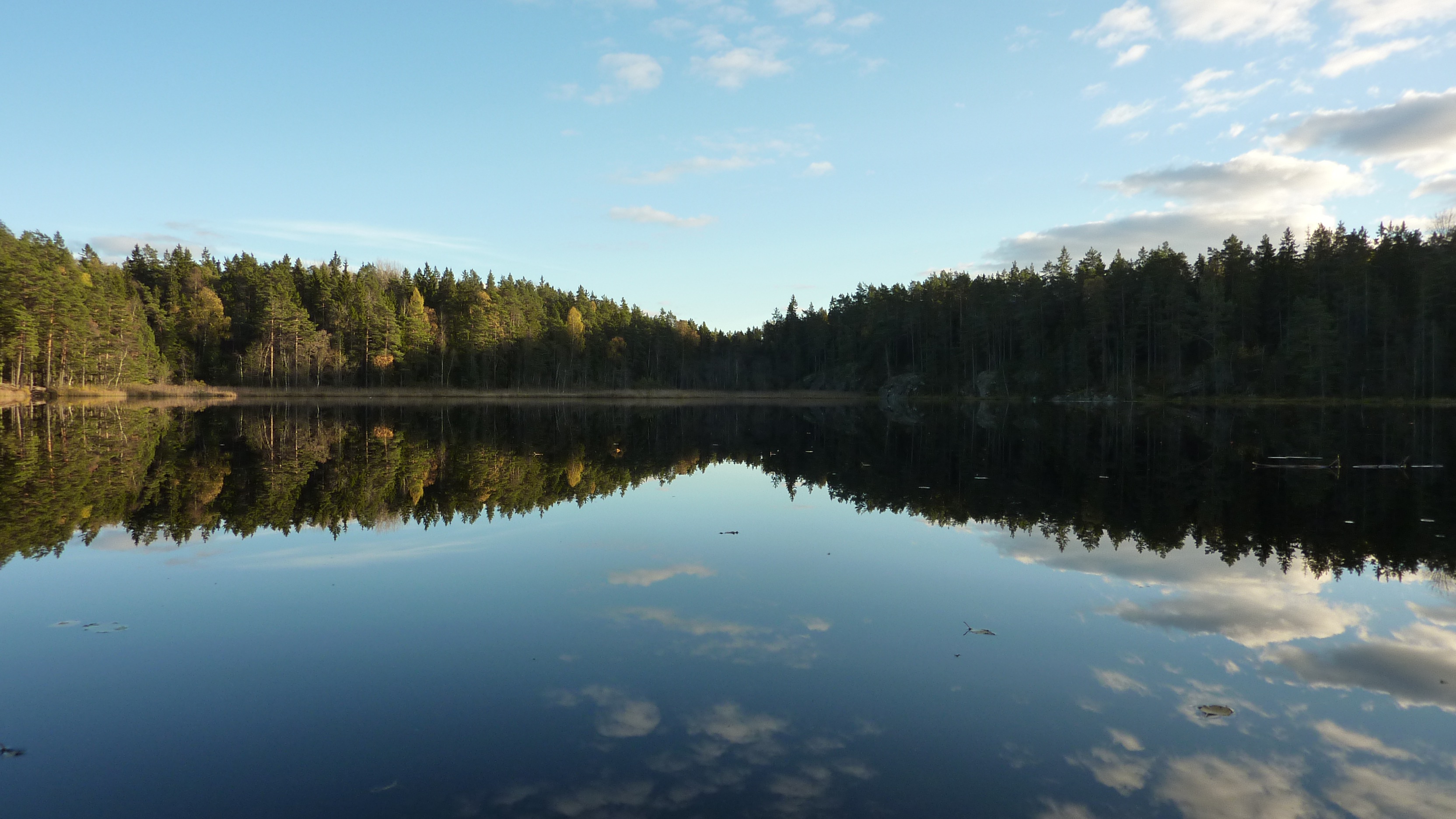
  • It's a beautiful country, forests and water are everywhere. Places like the one on the following picture can be usually found within one hour drive from your home.

  • A calm day in Tyresta, my favorite place near Stockholm
  • Sweden is an introvert-friendly society, unlike USA for example. Before I came here I read some blogs of Americans living in Sweden and they were basically complaining that Swedes should be more extroverted. I think it's nothing wrong with being introverted and other people think the same.

Thing I don't like

When someone asks me about my least favorite thing about Sweden, my answer usually revolves around the same topic. I call it lack of expressiveness and it has many forms. For example, Swedes don't like conflict and rarely disagree with people. But this goes in the other direction as well. They have trouble showing that they like something or somebody. It is thus very hard to make friends as well as make enemies. There are exceptions of course, for example I like that my supervisor is not afraid to criticize me and I also have a few Swedish friends.

Since I moved to Sweden, I have made about the same number of new Slovak friends as Swedish friends. On the other hand, I think I got into a conflict in Slovakia much more often than in Sweden. It's not uncommon to get into a conflict with a waiter/bus driver in Slovakia for no reason and I don't miss these pointless conflicts here. However, I still think Swedes should express their negative feedback more often.

The lack of expressiveness has effects on the whole society and not just one-on-one interactions. The way people dress is very uniform, nobody wants to stick out and express themselves. Swedes describe themselves using the word lagom, which means just the right amount. The Wikipedia entry for lagom among other things says about the Swedish society:
Nonetheless, it is still widely considered ideal to be modest and avoid extremes.
Another phenomenon explaining the Scandinavian culture is Law of Jante which says
You are not to think you're anyone special or that you're better than us.
However, I have a feeling that this is slowly changing, especially in the big cities people are not that homogeneous and try to be unique in some way.


What I learned

I seldom end up where I wanted to go, but almost always end up where I need to be. – Douglas Adams
I learned that things almost never go as planned. On the other hand they often went much better than planned. I got the honor to teach the best high school and university programmers in Sweden, I got an awesome part-time job at Spotify with a lot of autonomy and there were a few more positive surprises.

Of course there have been some negative surprises, but I have never questioned my decision to move abroad. I learned a lot by being forced outside of my comfort zone. It is hard sometimes, but it's worth it in the long run.

I encourage everyone to try living abroad at least for a while. You will be frustrated and lonely at times, but in the end you will become stronger and a better person. Psychologists claim that the best time for this decision are your twenties, so don't waste your time!

06 April 2013

Kebnekaise, the Arctic journey

In March 2008 me and Kolo hiked for a week in Morocco in High Atlas in altitudes ranging from 2500 to 4000 metres carrying everything we needed in our backpacks. Precisely 5 years later the two of us planned a trip of similar difficulty, a week of ski touring and mountaineering beyond the Arctic Circle near the highest mountain in Sweden, Kebnekaise.

After months of research and preparation I was really excited to go. Well, not so fast! 4 days before we were supposed to leave I got a 40-degree fever and could barely move. Maybe it didn't make sense for Kolo to fly to Sweden from Boston after all. Luckily, just a few hours before his flight the doctor told me that even though I had influenza, I could be skiing on Monday or Tuesday.

We started our trip as planned but the first day I stayed in bed at Kebnekaise fjällstation while Kolo went alone for an easy trip. On Monday I tried to ski but only for 3 hours, since my lungs were now fighting with a secondary bacterial infection and were still very weak.


On Tuesday we decided to go to Tarfala, another mountain hut in the area. The weather was horrible but at least we had the hut and the valley only for ourselves. In the afternoon we went for a ride on Isfallsglaciär. The snow was awesome but the slope was not steep enough for sufficient speed.


According to the forecast, Wednesday was supposed to be without wind. When we woke up, the Tarfala valley was silent. We started climbing towards Kaskasatjåkka (2076 m), but when we reached a saddle at 1800 m, the wind picked up speed again. We skied down in a complete whiteout sometimes not knowing if we were going up or down. Sometimes I hit a small hill but I couldn't see them, because everything was white.


We decided to take a shortcut through Kebnetjåkka lilltopp, ending with a downhill ride right to the doors of Kebnekaise fjällstation. "It's half past one, we have 5 hours to do this", said Kolo. I laughed, because it looked like 2 easy hours. Little did I know what was going to happen next. After we reached a plateau the wind got so strong it was difficult to maintain balance while standing. It must have been between 60 to 90 km/h, no wonder this is the windiest place in Sweden with a record of 292 km/h (and then the station broke). We turned around for the second time today and continued in the valley with less wind. We reached the hut just before six.


Thursday was the last possible day for ascending Kebnekaise sydtopp (ca. 2110 m), the highest mountain in Sweden. The weather was great, clear sky and almost no wind, so we made it without big problems. The view from the top was simply breathtaking.


Countless stones made the descent harder, but at least I trained skiing in 3-meter narrow snow fields surrounded by stones. After the hard part we were rewarded with a ride in an awesome powder just below Tolpagorni. After climbing 1800 height meters and 9.5 hours we were back at Kebnekaise fjällstation. This was one of the hardest day trips I have ever done and my lung infection and temperature between -10 and -15 degrees didn't make it easier.


On Friday morning I woke up completely exhausted and still coughing too much, so Kolo went alone for a ride in the sunny weather.


Finally it's time to go home after a week long Arctic experience. We will be back!

A small selection of photos is on Flickr and a full album on Google Photos.

17 December 2012

Dirty Nights in Dolomites

All three of us, Martin, Milan and Lukáš, were pretty excited about going to Dolomites, hiking for 6 days in a mountain range that looked very beautiful on the pictures on Google Search. It looked even more impressive in reality and we had a lot of fun, as usual.


Sunday

After 9 hours of car ride and sleeping in a camp in Cortina d'Ampezzo, we started our dirty expedition from pass Falzarego and took a break after 46 seconds of walking to eat lunch. After lunch and an hour of ascent, it started snowing and got cold very quickly. Luckily, there were sheep that kept us pleasant company.


The sheep were sad when we left them with tears in our eyes, but we had no other choice but continue. In the next few hours we noticed that every mountain in Dolomites has its own shape and color. That's true for every direction you look. We have been to a lot of mountains all over the world but this is something special. It looks like a different planet.


In the evening at Rifugio Lavarella we made a joke about filming a movie in Dolomites and we decided to call it "Dirty Nights in Dolomites", but it’s a different genre than you might think. Or maybe not. This name was so catchy and eloquent, that it became very soon also the name for our expedition.


Monday

Dolomites were surprising us with different shapes every day, for example Seekofel (2 810 m) looked pretty old and wrinkly, so we had no other choice but to climb it.


The weather couldn't have been better that day.


Look, do you see the naked girl on the other mountain?
After dinner Martin and Milan did some bouldering and it couldn’t go without blood and pain.


Tuesday

After two exhausting days with heavy backpacks we made a decision to have a lighter third day, so we called it "lazy Wednesday" even though it was a Tuesday. Our first stop was the green Lago di Braies and we couldn't resist bathing in its 13-degree water. Our bodies later thanked our irrational decision with good mood and generous appreciation of ambient air temperature.


After lunch in Dobbiaco we took a bus to Rifugio Auronzo under the famous Tre Cime / Drei Zinnen. Unfortunately we took the wrong path and ended up too high in steep terrain. We were closer to Tre Cime than we would ever expected. After coming to Dreizinnenhütte we couldn't take enough pictures. This must be one of the most beautiful places on Earth.


View from Dreizinnenhütte after sunset

Wednesday

Finally time for some rock climbing on a via ferrata. We climbed a very old via ferrata build in World War 1 to Toblinger Knoten (2617 m).


In the afternoon we slept, walked around and took some more cool pictures.


The staff at Dreizinnenhütte was cool, the waitresses are very pretty there and some of them are also climbers. In the evening Milan used an external flash that was probably 20 kilometers away to make this awesome picture.


Thursday

We were ogling Paternkofel (2 744 m) for two days from the hut and now it was time to finally climb it. It was a much easier climb than what it looked like at first.


It was very hot and we sunbathed and bathed in 2400-meter altitude after lunch. We continued sunbathing later at Zsigmondy Hütte. This hut has an awesome view and the atmosphere was great with much fewer tourists than at Dreizinnenhütte. It's no wonder that we got a great idea for our next music album here.


Friday

Lukáš's ankle hurt, so he took it easy and descended to Dobbiaco, while M&M tried the famous Alpinisteig. The weather was sunny, maybe too sunny. Alpinisteig trail was worth the sunburn.


In the evening we randomly wandered through Cortina d'Ampezzo in a desperate search for an open bar. We managed to get a big applause and the attention of everyone when Lukáš broke Milan's wine glass.

Saturday

Sadly we had to leave, but we healed our souls with high quality Italian shopping. Lots of money has been spent on pasta, Proraso and medicine to heal our wounds after a tough week.

The Proraso guy and the pasta guy
A short selection of pictures is on Flickr and a full album on Google Photos. This post was mostly written by me and Martin added a few sentences.

12 September 2012

Living with histamine intolerance

Two weeks ago I suggested histamine tolerance as a diagnose to a stranger on the internet. Yesterday he/she thanked me:

Hey I know it has been like 2 weeks since you told me about histamine intolerance (not sure if you even remember), but I just feel like I need to thank you. I am now 99% sure my problem is actually a histamine intolerance instead of a wheat intolerance!

I think it was a placebo for the first few days of the wheat free diet, then I got really ill again. Since starting a low histamine diet, my symptons have reduced drastically. I've had a (mainly) runny nose and other issues for actually over 5 years now and they've gradually got worse. So if I really do have a histamine intolerance, you have done what maybe 20 doctors, a grand of my own money, 3 operations and lots of depression couldn't... I can't believe it was never suggested to me before!

I do still need to get it confirmed by a doctor maybe but...If I ever meet you irl, I'd like to shake your hand. THANKS

Almost everyone suffering from histamine intolerance has the same story as this one. They have been to many doctors in 5-10 years, it cost them a lot of money, but nothing really changed and things got often worse. Then they found their diagnose and now they feel reborn.

My story is similar. When I was a kid, I was competing in orienteering (running in the forest with a map). I ran around 1500 km a year – mostly in the forest in the mountains. In 1999, I was a national champion twice. Then, in April 2000, we had a first round of qualification for the school championship. This was a very small competition in my hometown, the first round of the national championship. I ran but suddenly couldn't breathe. I finished 3rd and barely qualified to the next round. I was a national champion who came 3rd among kids that didn't even train!

In the next 2 years I visited maybe 10 doctors all over Slovakia. Everything was negative, I didn't have asthma and I was the healthiest person. One doctor even suggested that the problem was only in my head. Now after 12 years I finally know the cause.

Training and competing was very painful, so I stopped completely soon after that. I also had other problems later, one of the worst was insomnia and again, many doctors couldn't help me and I was the healthiest person.

Last year, I went to a doctor and got a medicine and since then it went downhill very fast. The pills I was taking made the intolerance worse and I got a different and stronger pill every few months. In the end I was in constant pain and could sleep 3-4 hours a day. In the meantime, my friend Katka suggested the diagnose to me. Now it's half a year since I started my diet and my stomach is almost fully recovered from all the damage done by the pills.

For the last 2 months I'm feeling like I'm reborn. I have better sleep and I'm no longer tired all the time. I don't get painful migraines in the middle of the day. I have more energy, better focus and I actually feel a bit smarter. It feels like they day suddenly has 40 hours. I have so much energy and time that sometimes I don't know what to do.

I'm glad I finally figured it all out. The real life starts now.

05 September 2012

Potatoes

I found the following story written by a 8-year old lying on the street.
Vegetables are scary. My friend was killed by a falling bag of potatoes. This is a scientific proof that 20 kg of potatoes per day can kill a person. So I think veganism and vegetarianism is bad, because they eat too much vegetables.

Lukáš, 8 years old